Overview
 Travel Information A-Z
 Tour Recommendations
 Login Tour Operator
 Travel Information The Caribbean A-Z | Overview | Tour Recommendations
Reiseinfos Bequia (St. Vincent & the Grenadines) | Trinidad & Tobago | Santa Lucia
|
 |
Holidays |
Please check the current entry and visa requirements with your embassy.
European Union citizens do not need a visa to enter and stay up to 90 days in St. Vincent & the Grenadines; passport valid for at least another six months is required. Children’s passports are accepted if they have a photograph. Travelers should have an onward or return ticket.
When leaving the country, an airport tax of currently 40 XCD or 20 USD is due. We urgently advise to check in at the airport approx. two hours prior to your flight’s departure in order to avoid being canceled due to possible overbooking.
Climate
Hot tropical climate, moderated by trade winds. The hottest months are June and July; occasionally, strong precipitations occur.

Communications
Mail: Airmail to Europe and North America takes up to 4 weeks, maritime mail up to 6 weeks. Mail stamps are available in shops selling postcards. Hotel receptions mail letters and cards for a tip of approx. 1 US$. Telegrams can be sent only from major cities and hotels.
Telephone: International Direct Distant Dialing is possible with most countries. Card phones are to be found everywhere on the island. Telephone cards are available anywhere at distribution points. Foreign phone calls may be paid with credit cards MasterCard, Visa, Discover, AT&T and Bell, if realized via operator.
Fax: Available in many hotels.
Internet: Internet access is possible from some hotels.
1 East Caribbean Dollar = 100 cents. Bank notes circulate in denominations of 100, 50, 20, 10 and 5 EC$, coins in denominations of 1 EC$ as well as 25, 10, 5, 2 and 1 cent. U.S. Dollars are accepted almost everywhere. The East Caribbean Dollar is linked to the U.S. Dollar. All known credit cards are accepted.
Customs
The import of weapons (including blank guns, diving and signal guns) is allowed only with special import permits. The following articles may be brought into St. Vincent & the Grenadines free of duty: 200 cigarettes or 50 cigars or 227 g of tobacco; 1.4l of alcoholic beverages.
Electric power
220/240 V, 50 Hz. In hotels also 110 V may be found. Adapters are required.
Geography
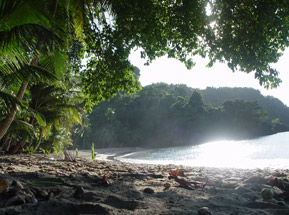
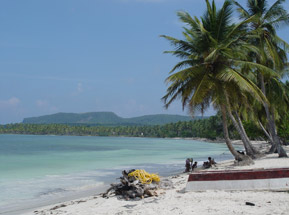
St. Vincent & the Grenadines is a group of the Windward Islands in the southern part of the Lesser Antilles, south of St. Lucia and north of Grenada. The total surface of all islands is 389 km2. The island’s capital Kingston has approx. 30,000 inhabitants. As all islands belonging to the group, also St. Vincent is of volcanic offspring. Its landscape is mountainous with exuberant vegetation and black sandy beaches. The extinct volcano Mt. La Soufrière (1,234 m) is the island’s highest elevation; there is a lake deep down in its crater. The islands of Bequia (pronounced »Beckwi«), Petit Nevis, Isle à Quatre, Pigeon Island, Battowia, Baliceaux, Mustique, Petit Mustique, Savan, Canouan, Petit Canouan, Mayreau, the Tobago Cays, Union Island, Palm Island and Petit St. Vincent all form the prolonged chain of the Grenadines. All the Grenadines have white sandy beaches, clear waters and exuberant vegetation.
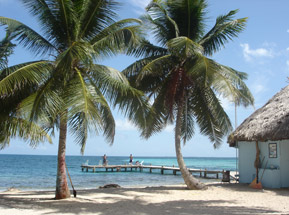
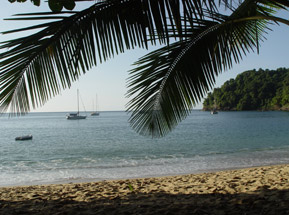
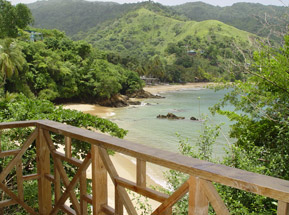
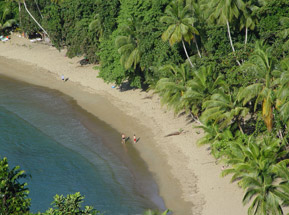
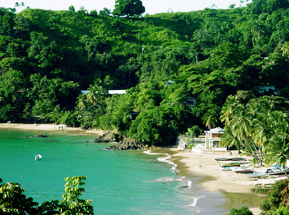
Bequia, 14 km south of St. Vincent, with a surface of 18 km2 is the largest of all Grenadines islands. Due to its isolation prior to the construction of the runway in 1992, very ancient traditions such as boat building, whaling and fishing (to a very limited extent) were able to survive. In the water protection area, neither harpoons nor slings or nets must be used. The island’s inland is hilly and forested, forming an impressive background for the many bays and beaches. Admiralty Bay, the island’s natural harbor, is a preferred berth for sailing boats from all over the world. On the shore, locals can be seen building hand-made boats. Another good possibility for bathing and water sports is Lower Bay. The seafront of Port Elizabeth hosts bars, restaurants and crafts shops. Bequia is surrounded by golden yellow sandy beaches forming bays ideal for sailing, swimming, snorkeling and scuba diving.
Parliamentarian Monarchy (Commonwealth of Nations), Commonwealth monarchy, parliamentarian democracy
01./ 02. 01. New Years Eve
22.02. Independence Day
Easter: Good Friday, Easter Sunday & Easter Monday
01.05. Labor Day
Whit Monday
07.06. Corpus Christi
05.08. Liberation Day
07.10. Harvest Festival
13.12. National Day
25./ 26.12. Christmas
English is the island’s official language. Creole English is the vernacular language; French Patois is likewise spoken.
Photographing and Filming
Before taking photos of local people or their houses, ask for their permission. Although the inhabitants of most islands generally do not react as aggressively as e. g. Jamaicans, it is a matter of courtesy not to photograph or film unknown people unasked.
Population
The island state of St. Vincent & the Grenadines has a population of approx. 117,200 inhabitants, predominantly of African descent. 65.5 % of the population is black, 19% are mulattoes, 5,5% from India and 3,5% whites.
Shopping
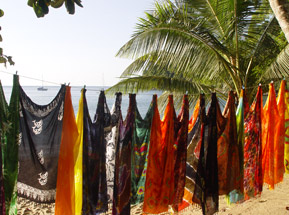
Local shopping hints include straw wickers, grass carpets and aromatic spices. When buying typical stamped woolen island textiles, numerous shops offer to tailor clothing within a period of two to three days.
Time Zones
The time difference with GMT is – 4 hours. There is no daylight saving time in St. Vincent & the Grenadines.
Tips
10-15% service fee is included in all bills. Taxi drivers do not expect tips.
Vaccination Requirements & Medical Care
Vaccines are not bindingly required to enter St. Vincent & the Grenadines, save when coming from areas endemically affected by yellow fever, in which cases yellow fever vaccination must be evidenced. For short trips to St. Vincent & the Grenadines, we recommend prophylactic vaccination against Hepatitis A, Tetanus and Diphtheria. For longer stays we also recommend vaccination against Hepatitis B and Typhoid.
Malaria does not occur on St. Vincent & the Grenadines; the mosquito-borne infection of dengue fever, however, does. We recommend corresponding protection against mosquito bites, e. g. by means of mosquito nets or anti-mosquito sprays or liquids. Should fever and rash occur, a doctor should be consulted.
Travelers should be aware of hygiene measures when consuming fruits, vegetables and meat, as well as fish and sea food. Tab water is considered safe but should be avoided by sensitive persons or after major rainfalls (water gets brownish).
Given the insufficient medical care on the islands, we urgently advise contracting an international health insurance including emergency repatriation, prior to traveling.
Home | History | Philosophy | Otto`s Team | References | Contact us | GTC
Ecuador - Peru - Venezuela - 2014